Instittutional Insights: UBS ' Gold, Tactical Weakness, Strategic Strength'

Gold: Tactical Weakness, Strategic Bull Case Intact
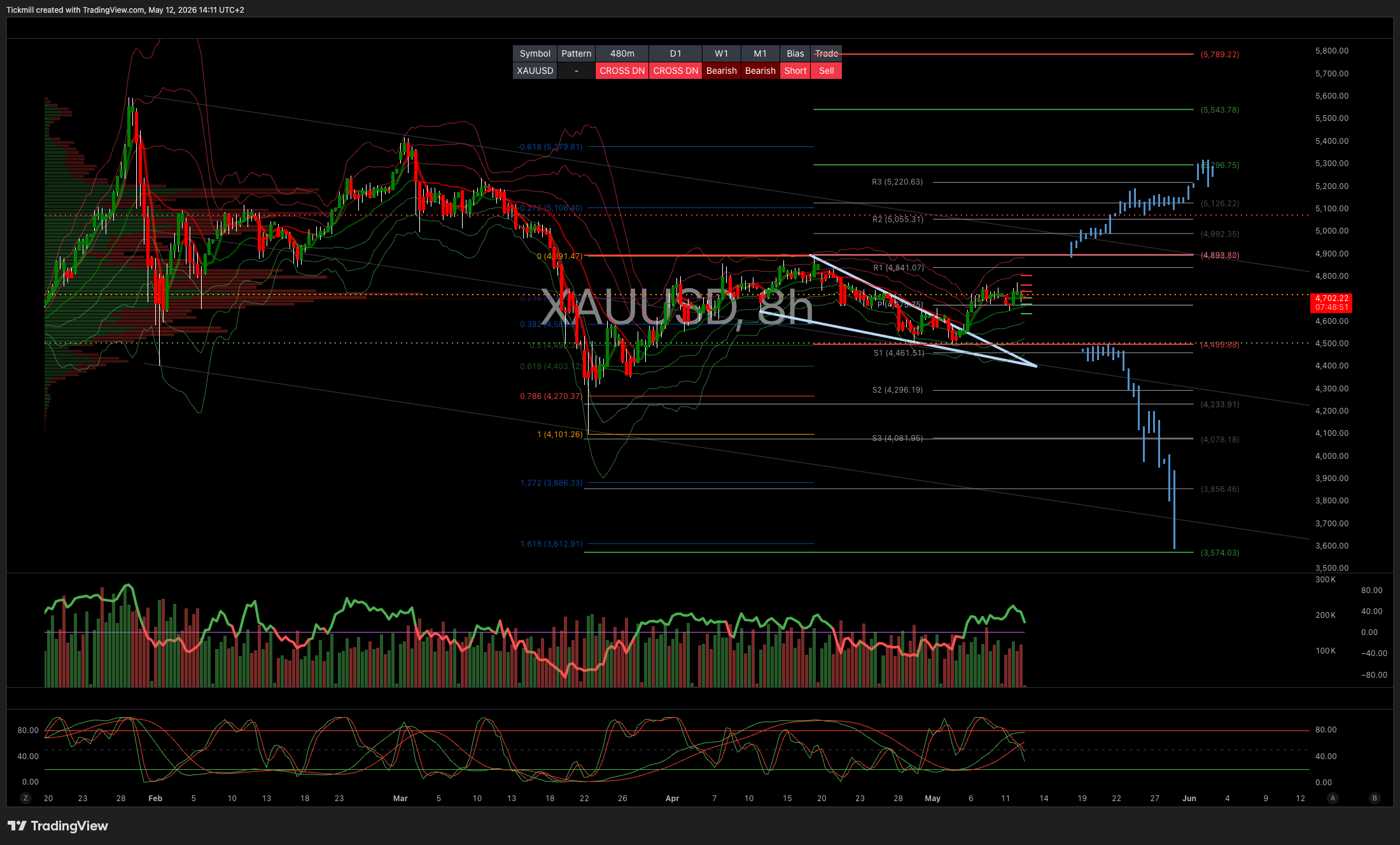
Gold has corrected meaningfully from its January highs, trading near USD 4,700/oz, around 12% below its all-time high. The pullback has been driven by a less favorable macro mix: higher energy prices, a stronger US dollar, and renewed fears that central banks may need to keep rates higher for longer. But the core message is that this looks more like a temporary setback than a breakdown in the structural bull case.
The long-term drivers that powered gold’s rally remain in place: strong physical demand, improving ETF flows, central bank reserve diversification, elevated fiscal deficits, political uncertainty, and the likelihood that real yields eventually move lower as the Fed cuts rates.
## 1. Why gold has struggled recently
Gold’s weakness is somewhat counterintuitive given the Middle East conflict and geopolitical risk, but the mechanics make sense.
Higher oil prices have raised concerns about inflation persistence. That has pushed markets to price a more hawkish policy outlook, lifting real yields and supporting the dollar. Both are near-term headwinds for gold.
Gold usually performs best when investors expect lower real yields. But if geopolitical risk creates an inflationary energy shock, the first reaction can be negative for gold because markets worry that central banks will stay tighter for longer.
The recent pressure therefore reflects three linked forces:
- Higher energy prices
- Stronger USD
- Higher real yield expectations
- Greater opportunity cost of holding gold
A stronger dollar also makes gold more expensive for non-dollar buyers, which can weigh on international demand.
Takeaway: gold has not sold off because the strategic case is broken. It has sold off because the market has been pricing a more hawkish central bank response to the energy shock.
## 2. The structural demand story remains strong
Despite the correction, the demand backdrop remains robust. World Gold Council data show strong demand in the first quarter, including record physical gold buying by individuals and continued central bank purchases.
That is important because the gold market is no longer only a “real yield and dollar” trade. The post-2022 gold bull case has increasingly been supported by reserve diversification, geopolitical hedging, fiscal concerns, and private-sector demand for stores of value.
The key demand pillars are:
- Record physical demand from individuals
- Improving ETF flows
- Strong central bank purchases
- Reserve diversification away from USD concentration
- Demand for portfolio hedges amid political and fiscal uncertainty
ETF demand is particularly important because Western investor positioning had been a missing piece during parts of the rally. If ETF flows continue to recover, gold can rise even if central bank buying merely remains steady rather than accelerates.
The forecast for 2026 gold ETF inflows has been raised to 825 metric tons, from a prior estimate of 750 metric tons, which suggests investor demand is expected to remain a powerful support.
Takeaway: the underlying buyer base remains broad and durable.
## 3. Gold can benefit in the second phase of a crisis
The note’s crisis-phase point is key. Gold does not always rally immediately during the first phase of a geopolitical shock, especially if that shock pushes energy prices higher and tightens monetary policy expectations.
Gold tends to perform best in the second phase, when:
- Growth expectations fall
- Central banks become more dovish
- Real yields decline
- Investors seek portfolio hedges
- Fiscal and political uncertainty remain elevated
That is why an eventual de-escalation in the Middle East could paradoxically be supportive for gold if it lowers oil prices, reduces inflation fears, weakens the dollar, and brings Fed cuts back into view.
In that scenario, gold could regain support from both sides of the macro equation: less inflationary policy pressure and more demand for long-term hedges.
Takeaway: the first phase of the crisis has hurt gold via higher real yields; the second phase could help gold if growth fears rise and policy turns easier.
## 4. Year-end target: USD 5,900/oz
The investment view remains constructive, with gold expected to rise toward USD 5,900/oz by year-end.
That target depends on several assumptions:
- The recent gold weakness proves temporary.
- The Fed eventually cuts rates.
- The US dollar weakens later in the year.
- Real yields decline.
- Central bank buying remains strong.
- ETF inflows continue to improve.
- Political uncertainty and fiscal deficits remain supportive.
The dollar and Fed path are especially important. If the Fed does not cut, or if oil keeps inflation elevated enough to keep real yields high, the path to USD 5,900 becomes harder. But if the oil shock fades and the Fed gains confidence that inflation is cooling, gold should benefit.
Takeaway: the year-end target is a real-yield and dollar story layered on top of structural reserve demand.
## 5. Portfolio role: strategic hedge, not just a tactical trade
Gold remains attractive as a strategic portfolio diversifier. The note argues that a mid-single-digit allocation is optimal for investors with an affinity for gold.
That makes sense because gold’s role is not only to generate price appreciation. It also provides protection against:
- Geopolitical shocks
- Fiscal credibility concerns
- Currency debasement fears
- Central bank policy mistakes
- Equity/bond correlation risk
- Reserve diversification trends
In a world of elevated government debt, persistent deficits, geopolitical fragmentation, and periodic inflation shocks, gold’s store-of-value role remains relevant.
Takeaway: gold should be treated as a strategic hedge, not simply a short-term risk-on/risk-off instrument.
# Trading Implications
Gold is caught between a negative near-term macro impulse and a still-positive structural backdrop.
Near term, the main risk is that oil remains high, the dollar stays firm, and real yields keep rising. That would keep gold under pressure or range-bound.
But the medium-term asymmetry remains constructive. If the Middle East conflict de-escalates, oil falls, and the Fed cutting cycle comes back into focus, gold could reprice quickly. ETF inflows and central bank buying should provide a floor, while weaker USD and lower real yields would provide the upside catalyst.
Preferred approach:
- Stay structurally long gold.
- Add on dips caused by real-yield spikes.
- Use gold as a portfolio diversifier rather than a pure momentum trade.
- Watch USD and real yields as the key tactical drivers.
- Watch ETF flows as confirmation that Western investor demand is returning.
Gold’s correction reflects higher energy prices, a stronger dollar, and fears of tighter-for-longer monetary policy. But the long-term bull case remains intact. Physical demand is strong, ETF flows are improving, central banks continue to buy, and structural concerns around debt, deficits, geopolitics and reserve diversification remain supportive.
The key catalyst for the next leg higher would be a weaker dollar and lower real yields as the Fed eventually cuts. On that basis, the year-end target of USD 5,900/oz remains credible, with gold continuing to serve as a strategic hedge and effective portfolio diversifier.
Disclaimer: The material provided is for information purposes only and should not be considered as investment advice. The views, information, or opinions expressed in the text belong solely to the author, and not to the author’s employer, organization, committee or other group or individual or company.
Past performance is not indicative of future results.
High Risk Warning: CFDs are complex instruments and come with a high risk of losing money rapidly due to leverage. 68% and 74% of retail investor accounts lose money when trading CFDs with Tickmill UK Ltd and Tickmill Europe Ltd respectively. You should consider whether you understand how CFDs work and whether you can afford to take the high risk of losing your money.
Futures and Options: Trading futures and options on margin carries a high degree of risk and may result in losses exceeding your initial investment. These products are not suitable for all investors. Ensure you fully understand the risks and take appropriate care to manage your risk.
Patrick has been involved in the financial markets for well over a decade as a self-educated professional trader and money manager. Flitting between the roles of market commentator, analyst and mentor, Patrick has improved the technical skills and psychological stance of literally hundreds of traders – coaching them to become savvy market operators!